Top 7 biggest birds in the world
Outlines
The Biggest Birds in the World
Some of the largest birds in the world survive Antarctic temperatures of –60 °C (–76 °F), while others glide for thousands of miles over the Southern Ocean without flapping their wings. Some even sprint across the African savanna at speeds of up to 70 km/h (43 mph). In this article, Rumminess Africa Safaris explores the biggest birds on Earth, their unique characteristics, and where they live.
1. What Is the Biggest Bird in the World?
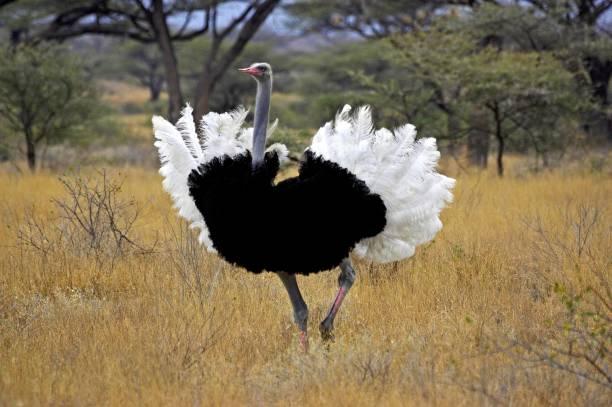
The ostrich is the largest bird in the world. Male ostriches can grow nearly 3 meters (9.8 feet) tall and weigh up to 150 kg (330 lbs). Despite their impressive size, they can run at speeds of up to 70 km/h (43 mph), making them among the fastest birds on land.
Ostriches live in groups with a complex social structure. Several females may lay their eggs in a shared nest, while the dominant pair helps protect the eggs. The incubation period lasts approximately 5–6 weeks. Just a few days after hatching, young ostriches can already walk and keep up with the adults.
Ostriches are native to Africa and can be spotted during safaris in Tanzania, particularly in Serengeti National Park, Ngorongoro Conservation Area, and Tarangire National Park.
Long before modern ostriches, the planet was home to even larger birds. Aepyornis maximus, commonly known as the elephant bird, lived in Madagascar and may have weighed around 600 kg (1,323 lbs). These flightless giants became extinct several centuries ago. Interestingly, genetic studies have identified the kiwi of New Zealand as one of their closest living relatives.
2. The Heaviest Flying Bird: The Kori Bustard
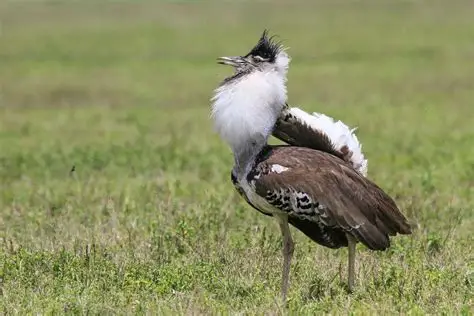
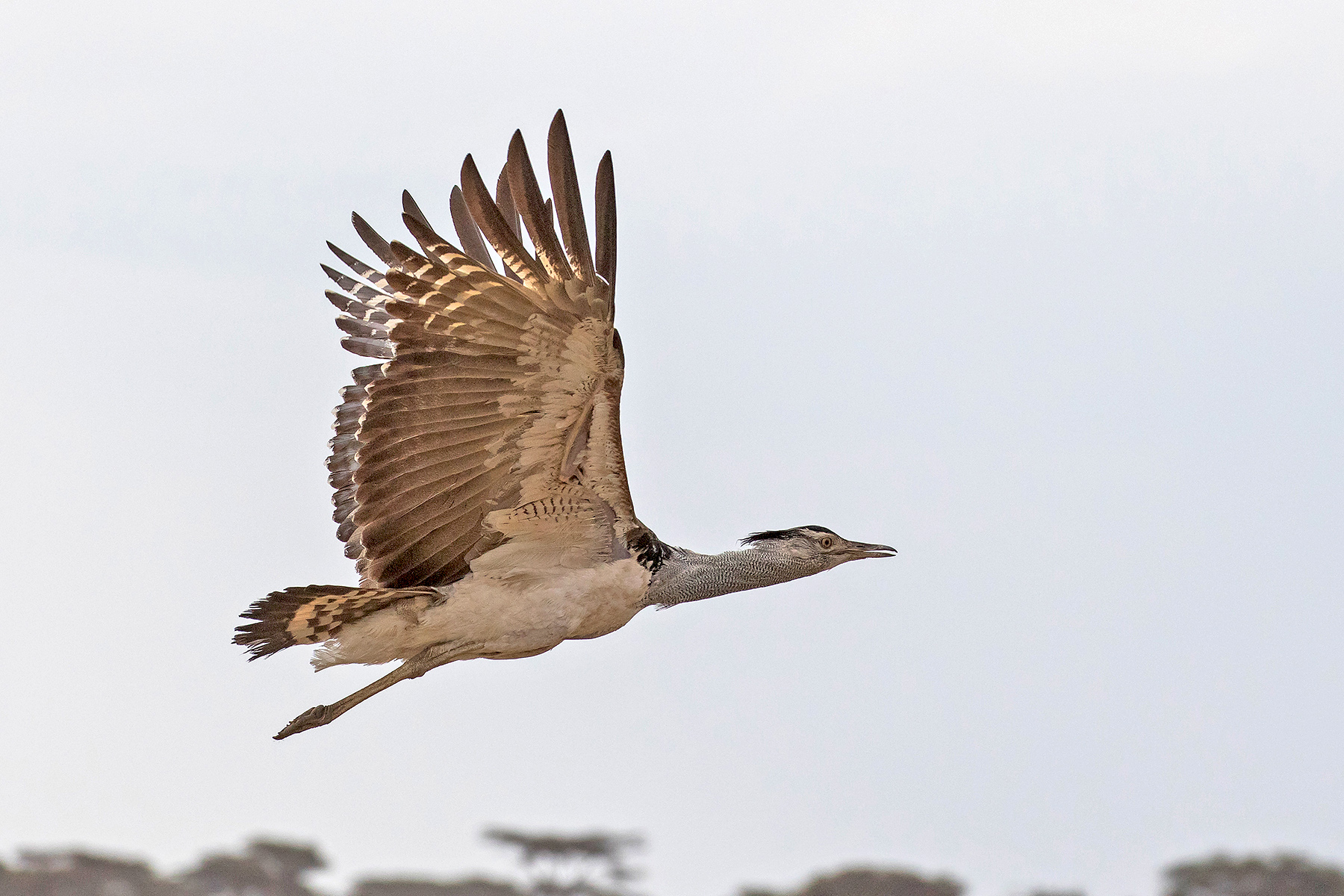
The kori bustard is the heaviest bird capable of flight. Male kori bustards can weigh up to 18 kg (40 lbs). They are found across the savannas and semi-desert regions of Eastern and Southern Africa, where they prefer open landscapes with scattered vegetation.
Although they can fly, kori bustards spend much of their time walking on the ground in search of food. Their diet includes seeds, insects, lizards, and small rodents. Their patterned feathers help them blend into dry grasslands, and when threatened, they often remain still rather than immediately taking flight.
During the breeding season, males perform impressive courtship displays by inflating their necks, raising their wings, and producing deep booming calls to attract females.
In Tanzania, kori bustards can be spotted in open habitats across parts of the northern and southern safari circuits, including Serengeti, Ngorongoro, Tarangire, and Ruaha.
3. The Largest Bird of Prey: The Andean Condor
The Andean condor is the largest flying bird of prey in the world. Adults can weigh up to 15 kg (33 lbs), with a wingspan reaching approximately 3.3 meters (10.8 feet). They live along the Andes Mountains of South America.
These impressive birds are experts at soaring. Instead of constantly flapping their wings, they use rising air currents to travel long distances while conserving energy. They are often seen gliding over mountainous landscapes in search of food.
Andean condors are scavengers, feeding mainly on the remains of dead animals. Their featherless heads help keep them clean while feeding. They also spend time in the sun, which helps maintain their feathers and skin.
They mature slowly, usually reaching sexual maturity at around 5–6 years. Females typically lay one egg every one or two years, and both parents take part in raising the chick. In the wild, Andean condors can live for several decades, sometimes reaching 70 years.
4. The Tallest Flying Bird: The Sarus Crane
The sarus crane is the tallest flying bird in the world, reaching heights of approximately 1.8 meters (5.9 feet). It is easily recognized by its grey plumage, long pink legs, and distinctive red skin covering its head and upper neck.
Sarus cranes are found in India, Nepal, Cambodia, Myanmar, and Vietnam. They prefer wetlands, marshes, flooded grasslands, and rice fields. Their diet includes plants, insects, frogs, fish, and small reptiles.
These cranes are known for forming long-term pair bonds. Their courtship displays are especially beautiful, involving coordinated movements, raised wings, and loud calls. They usually nest in shallow wetlands with thick vegetation, where females lay one or two eggs.
5. The Bird With the Largest Wingspan: The Wandering Albatross
The wandering albatross has the largest wingspan of any living bird, reaching up to 3.5 meters (11.5 feet). It spends most of its life flying over the open ocean and returns to land mainly for breeding.
These remarkable seabirds use a technique called dynamic soaring, allowing them to travel long distances by taking advantage of wind currents above the ocean. This enables them to glide for thousands of kilometers with very little effort.
Wandering albatrosses are mainly found across the Southern Ocean, where they feed on squid, fish, and other marine animals.
They are known for forming long-lasting breeding pairs. Females lay a single egg, which both parents take turns incubating for approximately two months. After hatching, the chick remains dependent on its parents for several months before becoming independent.
6. The Bird With the Longest Beak: The Australian Pelican
The Australian pelican is famous for its exceptionally long bill, which measures approximately 34–47 cm (13–18.5 inches). Beneath the bill is a large, flexible throat pouch that can hold a considerable amount of water and helps the bird catch fish.
Australian pelicans live throughout much of Australia, inhabiting coastal bays, lakes, rivers, wetlands, and estuaries. They often hunt in groups, working together to guide fish into shallow water before catching them with their bills.
These birds are also impressive flyers. Their wingspan can reach approximately 1.9 meters (6.2 feet), and they use rising air currents to glide over long distances.
During the breeding season, Australian pelicans gather in colonies. Females usually lay one or two eggs, and both parents help incubate and care for the chicks.
7. The Largest Bird in Antarctica: The Emperor Penguin
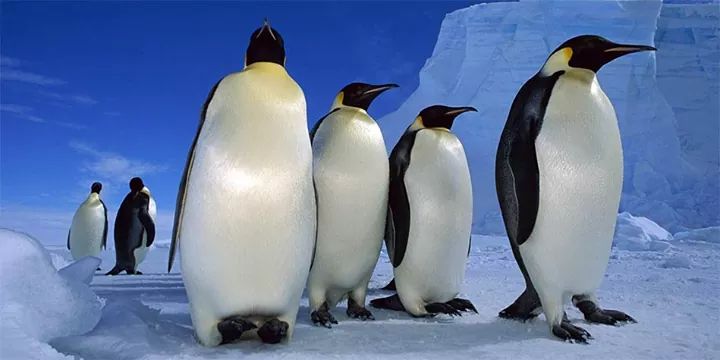
The emperor penguin is the largest penguin species in the world and the only bird that breeds during the Antarctic winter. Adults can reach approximately 120 cm (3.9 feet) in height and weigh up to 45 kg (99 lbs).
These remarkable birds are specially adapted to survive some of the harshest conditions on Earth. Their dense feathers and thick layer of body fat help protect them from freezing temperatures that can fall to –60 °C (–76 °F), accompanied by extremely strong winds.
Emperor penguins are excellent divers. They can dive deeper than 500 meters (1,640 feet) and remain underwater for more than 20 minutes while hunting fish, squid, and other marine creatures.
Their breeding season begins around May. After the female lays a single egg, she transfers it to the male, who keeps it warm on his feet beneath a special fold of skin. The female then travels to the ocean to feed. During this period, the male can go without food for several weeks while protecting the egg from the extreme Antarctic cold.
When the chick hatches, the parents take turns caring for it and finding food until it becomes strong enough to survive independently.
Biggest Birds in the World: Comparison Table
The following table compares the seven bird species according to their average weight, height, habitat, diet, and main viewing locations.
| Bird species | Average weight | Average height | Habitat | Diet | Where to see |
|---|---|---|---|---|---|
| Common ostrich | 104 kg (229 lbs) | 250 cm (8.2 ft) | African savannas and semi-deserts | Mainly plants, seeds, and small animals | Serengeti, Tarangire, Masai Mara, Amboseli, Kruger, Etosha |
| Kori bustard | 11.4 kg (25 lbs) | 120 cm (3.9 ft) | Savannas and semi-deserts | Insects, small vertebrates, and seeds | Serengeti, Ngorongoro, Tarangire, Ruaha, Kruger |
| Andean condor | 11.3 kg (25 lbs) | 115 cm (3.8 ft) | Andes Mountains | Carcasses of land and marine animals | Colca Canyon, Torres del Paine, Los Glaciares |
| Sarus crane | 8.5 kg (19 lbs) | 170 cm (5.6 ft) | Wetlands and grasslands in Asia | Plants, frogs, insects, and reptiles | Keoladeo National Park, Chilika Lake, Koshi Tappu |
| Wandering albatross | 11.9 kg (26 lbs) | 120 cm (3.9 ft) | Southern Ocean | Squid, fish, and other marine animals | South Georgia, Marion Island, Crozet Islands, Kerguelen Islands |
| Australian pelican | 5.5 kg (12 lbs) | 160 cm (5.2 ft) | Lakes, rivers, and coastal lagoons | Fish and aquatic creatures | Kakadu, Cradle Mountain, Snowy Mountains, Kangaroo Island |
| Emperor penguin | 31.5 kg (69 lbs) | 115 cm (3.8 ft) | Antarctica | Fish and squid | Snow Hill Island, Cape Taylor |
Discover Tanzania's Remarkable Birds With Rumminess Africa Safaris
Tanzania is home to an extraordinary variety of birdlife, from the impressive ostrich and kori bustard to colourful smaller species found across its forests, wetlands, lakes, and savannas.
During a safari in Serengeti, Ngorongoro, Tarangire, or Ruaha, visitors have opportunities to observe some of Africa's most fascinating birds in their natural habitats.
With Rumminess Africa Safaris, you can explore Tanzania's national parks, enjoy unforgettable wildlife encounters, and discover the country's incredible bird diversity.
INSPIRE YOUR JOURNEY