Olduvai Gorge: the “Cradle of Mankind”
Outlines
Olduvai Gorge: The Cradle of Human History in Tanzania
In northern Tanzania lies Olduvai Gorge, a remarkable archaeological site stretching approximately 48 km (30 miles). Located within the Ngorongoro Conservation Area, this ancient gorge has preserved important evidence of human evolution, including fossil remains of early human ancestors and some of the oldest stone tools ever discovered.
The discoveries made here transformed our understanding of human origins and helped establish East Africa as one of the most important regions in the study of human evolution. In this article, Rumminess Africa Safaris explores the history of Olduvai Gorge, its most important discoveries, the ancient tools found there, and what visitors can experience at the Olduvai Gorge Museum.
What Is Olduvai Gorge Famous For?
Olduvai Gorge is internationally recognized for its contribution to the study of human evolution. Archaeological discoveries made by Louis Leakey, Mary Leakey, and other researchers provided important evidence about early human ancestors who lived in East Africa millions of years ago.
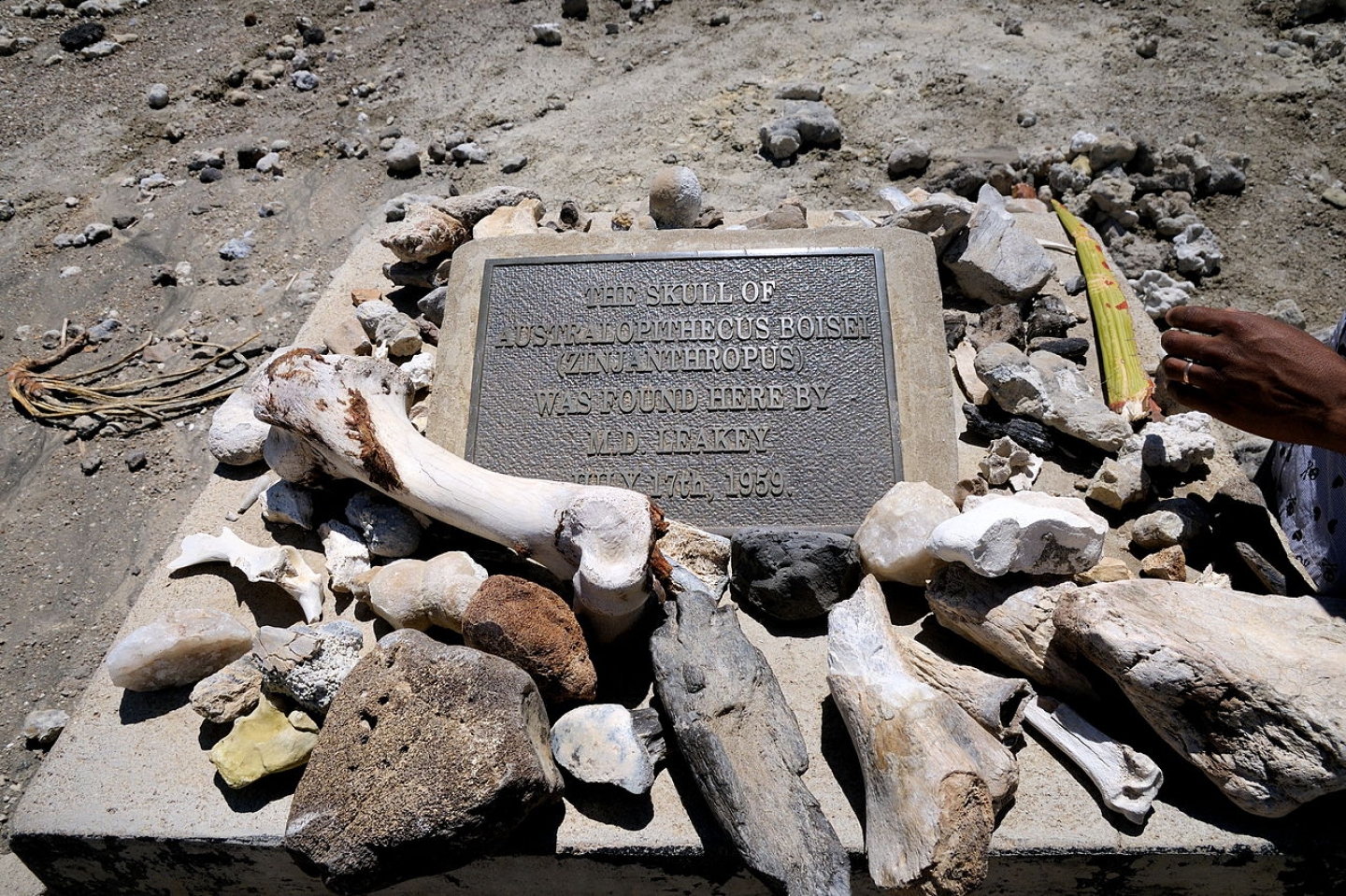
In 1959, Mary Leakey discovered the fossil remains of a hominid later identified as Paranthropus boisei. The discovery, originally named Zinjanthropus, was approximately 1.75 million years old and became one of the most important findings in the history of paleoanthropology.
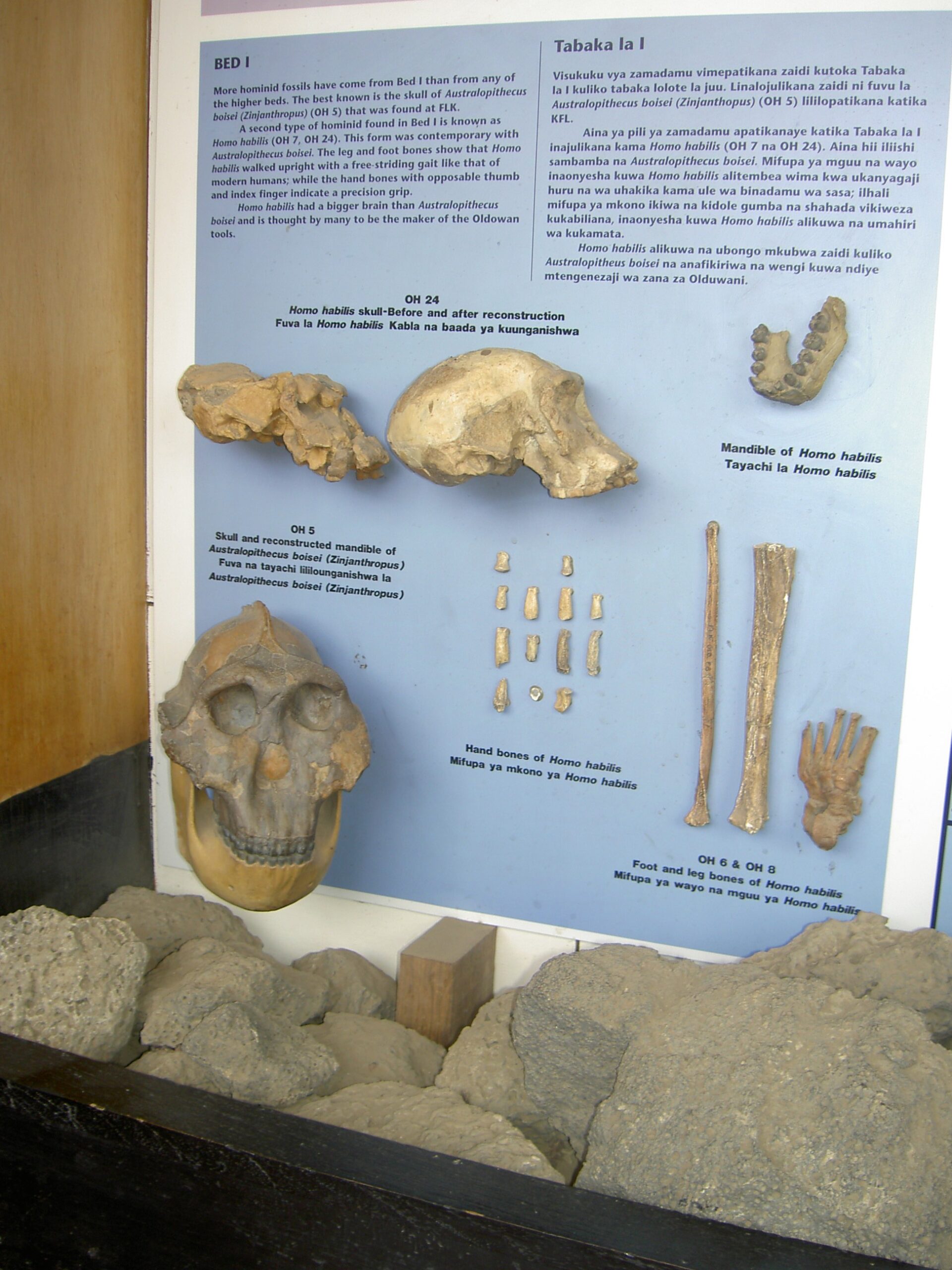
Further discoveries in 1960 included remains of Homo habilis, an early member of the human genus, together with other fossil evidence and stone tools. These findings helped scientists understand how early human species lived, adapted to their environments, and developed the ability to make tools.
Olduvai Gorge is located in the eastern part of the Serengeti ecosystem, within the Ngorongoro Conservation Area, approximately 150 km (90 miles) from Arusha.
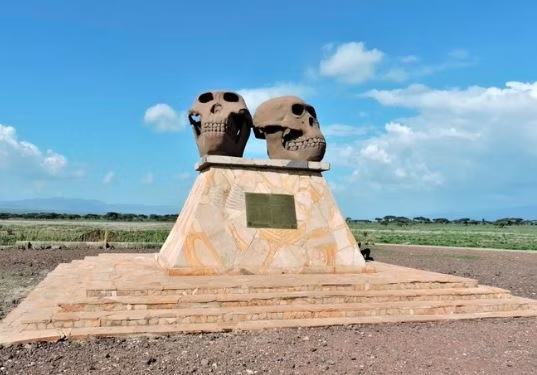
A monument near the gorge commemorates the discoveries that changed our understanding of human history. Visitors can also explore the Olduvai Gorge Museum, which displays fossils, stone tools, and information about the evolution of early humans.
What Is So Interesting About Olduvai Gorge?
The Story Behind the Discovery of Olduvai Gorge
The history of Olduvai Gorge's discovery dates back to the early twentieth century. In 1910, German scientist Wilhelm Kattwinkel visited what was then German East Africa during an expedition. His work focused on African sleeping sickness, but he also came across fossil remains in the area.
Kattwinkel recognized the potential importance of the site and reported his findings. The name Olduvai came from the Maasai word Oldupai, which refers to a plant commonly found in the area. The plant is known in English as wild sisal.
His discovery attracted the attention of other researchers, including German archaeologist Hans Reck, who later conducted important excavations in the gorge.
The First Findings and Early Challenges
In 1913, an expedition led by Hans Reck discovered a human skeleton in Olduvai Gorge. Reck initially estimated that the remains were approximately 150,000 years old. However, questions arose about whether the skeleton had been buried in the geological layer where it was found.
Later dating methods showed that the remains were much younger than initially believed, approximately 17,000 years old.
Years later, British anthropologist Louis Leakey became interested in the site. In September 1931, he returned to Olduvai with an expedition and discovered an ancient stone tool made from volcanic rock on his first day of excavation.
He later found many similar tools, including cleavers and other stone implements. These discoveries encouraged further research, although his early interpretations and age estimates faced criticism from other scientists.
After several years away from intensive research, Louis Leakey and his wife, Mary Leakey, returned to Olduvai in the 1950s to continue their investigations.
Groundbreaking Discoveries at Olduvai Gorge
One of the most important moments in the history of Olduvai Gorge came on July 17, 1959.
While Louis Leakey remained at camp because of illness, Mary Leakey continued working at the excavation site. She discovered part of a hominid jaw containing two teeth. The remains appeared to belong to an ancient human relative rather than a modern human or an ape.
Further excavation uncovered more fragments of the skull, which became known as the Nutcracker Man because of its powerful jaws and large teeth.
The fossil was initially named Zinjanthropus and was later classified as Paranthropus boisei. It was dated to approximately 1.75 million years ago.
The following year, in 1960, further excavations uncovered remains of Homo habilis and Homo erectus, alongside stone tools and other fossils. These discoveries provided valuable evidence of different hominid species living in the region during the early stages of human evolution.
Homo habilis became especially important because of its association with early stone-tool technology. Its name means "handy man", reflecting the connection between this species and the development of simple tools.
The discoveries at Olduvai helped establish the importance of Africa in the story of human origins and encouraged further archaeological research across East Africa.
Oldowan Culture: The First Human Stone Tools
The Earliest Stone Tools
The stone tools discovered at Olduvai Gorge helped scientists understand how early human ancestors used their surroundings to survive. These tools also gave their name to the Oldowan culture, one of the earliest known stone-tool traditions.
Oldowan tools were generally made by striking one stone against another to produce sharp edges. Early humans used these simple implements for cutting meat, processing animal remains, and accessing food.
One of the best-known examples is the chopper. It was usually made from a rounded stone with one sharpened edge, while the opposite side remained suitable for holding.
Small flakes produced during the process were also useful. They could be used for cutting and other basic tasks.
The Oldowan stone-tool tradition spread across several parts of Africa and beyond, providing important evidence of the development of early human technology.
Over time, more advanced stone-tool traditions emerged, including the Acheulean industry, which introduced more carefully shaped tools such as hand axes.
What Do the Stone Tools Tell Us About Human Evolution?
The discoveries at Olduvai Gorge are important because they help explain how early human ancestors adapted to changing environments.
Millions of years ago, environmental changes gradually transformed parts of Africa. Some areas that had once been covered by dense forests became more open, with expanding grasslands and savannas.
These changes created new challenges for early primates. Adaptations such as walking on two legs allowed some human ancestors to move more efficiently across open landscapes and freed their hands for carrying food and other activities.
Over time, changes in the hands, jaws, teeth, and brain helped early hominins develop new ways of interacting with their environment.
The ability to make and use stone tools was an important development. Sharp stones allowed early humans to process animal remains and access food that would otherwise have been difficult to obtain.
These discoveries also helped researchers investigate the relationship between technological development, diet, and human evolution.
Another important development was the emergence of Homo erectus, an early human species associated with more advanced tools and the first major expansion of early humans beyond Africa.
The evidence found at Olduvai Gorge provides an important record of these changes and helps scientists understand the long process through which modern humans eventually evolved.
The Leakey Family and the Study of Human Evolution
The Leakey family played a major role in research at Olduvai Gorge and in the wider study of human origins.
Louis Leakey and Mary Leakey made some of the most important discoveries at the site, while their work helped encourage further research throughout East Africa.
Their influence also extended beyond archaeology. Louis Leakey supported long-term studies of living great apes to better understand primate behaviour and the relationship between humans and other primates.
Three researchers became particularly well known through projects supported by Leakey:
-
Jane Goodall studied chimpanzees in Gombe Stream National Park in Tanzania.
-
Dian Fossey conducted research on mountain gorillas in Rwanda.
-
Birutė Galdikas studied orangutans in Borneo.
Their research contributed significantly to the understanding of primate behaviour and conservation.
The Olduvai Gorge Museum
The Olduvai Gorge Museum is one of the most interesting places to visit within the Ngorongoro Conservation Area. It was established by Mary Leakey in the 1970s and later expanded to provide visitors with more information about human evolution and archaeological discoveries.
The museum is built in a traditional Maasai-inspired architectural style, with a circular layout that reflects the design of a Maasai boma.
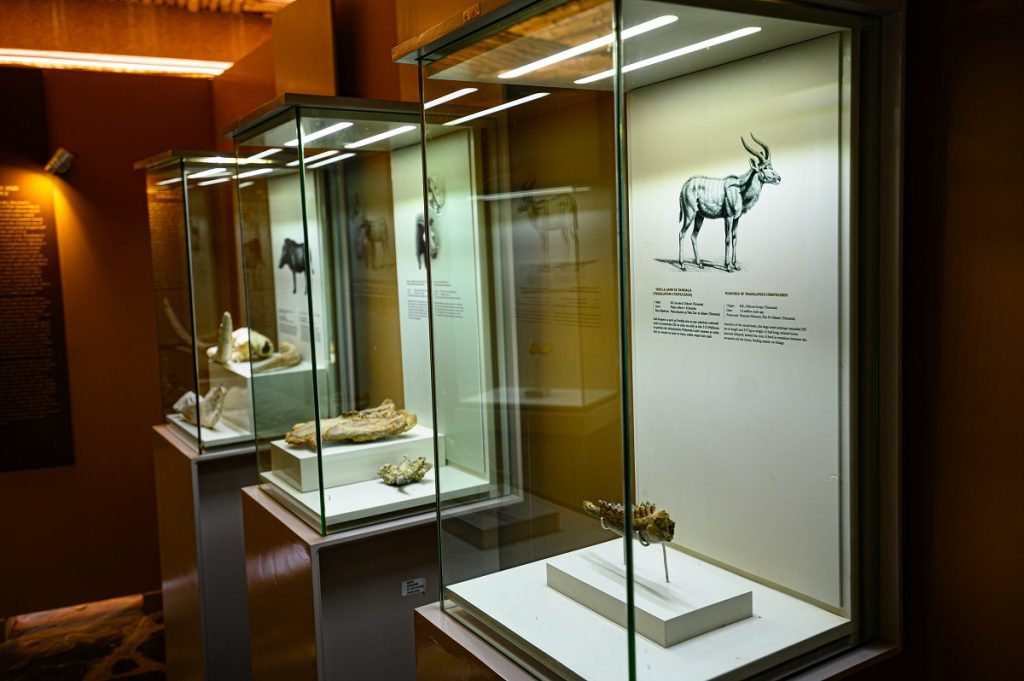
Inside, visitors can explore exhibits featuring fossil remains, stone tools, illustrations, and educational displays explaining the development of early humans.
Some of the important exhibits include:
-
Paranthropus boisei: The famous Nutcracker skull discovered by Mary Leakey in 1959.
-
Homo habilis: Fossil remains associated with one of the earliest members of the human genus.
-
Homo erectus: Evidence of an early human species that lived in Africa and later spread into other parts of the world.
-
Oldowan stone tools: Early tools used by human ancestors for cutting and processing food.
-
Ancient animal fossils: Remains of prehistoric animals that once lived in the region.
The museum also presents information about the famous Laetoli footprints, discovered by Mary Leakey in 1978. These fossilized footprints are approximately 3.6 million years old and provide important evidence that early hominins walked upright long before the appearance of modern humans.
Visitors can also learn about the ancient landscapes and animals that existed in the region millions of years ago.
A visit to the museum offers a deeper understanding of the discoveries made at Olduvai Gorge and the importance of Tanzania in the study of human evolution.
Can We Expect More Discoveries at Olduvai Gorge?
Olduvai Gorge continues to attract the attention of archaeologists and researchers interested in human origins.
Although many major discoveries were made during the twentieth century, the site still offers opportunities for further research. Its geological layers preserve evidence of ancient environments, animal life, and early human activity.
New discoveries can help scientists answer questions about how different hominin species lived, what they ate, how they used tools, and how they adapted to environmental changes.
Research in the wider Olduvai region has also continued to produce important findings, showing that the history of human evolution is still developing as new evidence becomes available.
For this reason, Olduvai Gorge remains one of the most significant archaeological locations in Africa.
Where Can You Learn More About Human Evolution?
Visitors interested in the history of human evolution can explore additional educational resources before or after visiting Olduvai Gorge.
Photographic Reconstructions and Virtual Museums
Digital fossil collections and virtual museums allow visitors to examine ancient remains and learn about early human ancestors from different parts of the world.
The African Fossils project, for example, provides digital 3D models of fossils discovered in East Africa. These models allow users to examine important specimens from different angles and understand their physical characteristics.
Other educational resources feature realistic reconstructions of early human ancestors, including Australopithecus, Paranthropus boisei, Homo habilis, and Homo erectus.
Virtual museum exhibitions also provide opportunities to explore prehistoric life without travelling to the museums themselves.
Documentaries About Human Evolution
Documentaries are another useful way to understand the discoveries made at Olduvai Gorge and the development of early humans.
A Species Odyssey
A Species Odyssey is a three-part documentary released in 2003. It explores millions of years of human evolution, beginning with early hominins in Africa and following the development of different human species.
The documentary covers important stages of evolution, including the development of upright walking, early stone-tool technology, and the spread of ancient humans into new territories.
Walking with Cavemen
Walking with Cavemen is a BBC documentary series released in 2003. It presents the lives of early human ancestors through a combination of scientific information and dramatic reconstructions.
The series explores different hominin species, including Australopithecus, Homo habilis, and Homo erectus, helping viewers understand how early humans lived and adapted to their environments.
Visit Olduvai Gorge With Rumminess Africa Safaris
Olduvai Gorge offers a fascinating opportunity to explore the history of human evolution in the very region where some of the world's most important archaeological discoveries were made.
A visit to the gorge and its museum can be combined with a wildlife safari in the Ngorongoro Conservation Area and Serengeti National Park. This allows visitors to discover both Tanzania's remarkable natural landscapes and its rich archaeological heritage.
With Rumminess Africa Safaris, you can include Olduvai Gorge in your northern Tanzania safari itinerary. Explore the museum, learn about the discoveries made by the Leakey family, and experience the landscapes that preserve an extraordinary record of our ancient past.
Visiting Olduvai Gorge is more than a sightseeing experience. It is an opportunity to connect with the story of human evolution and discover why Tanzania holds such an important place in the history of humankind.
INSPIRE YOUR JOURNEY