The Maasai Tribe. Discover the most well-known African tribe
Outlines
The Maasai People of Tanzania: Culture, Traditions, and Modern Life
What comes to mind when you hear about the Maasai people of East Africa? Perhaps you picture tall men dressed in red blankets, performing their famous jumping dance, or women wearing beautiful, colorful beadwork. You may also imagine traditional homes, cattle grazing across the savannah, and young warriors carrying wooden staffs.
These images are closely associated with the Maasai, one of East Africa’s most recognizable ethnic communities. Known for their strong cultural identity, pastoral traditions, distinctive clothing, and deep connection to livestock, the Maasai have maintained many of their customs while adapting to changes in the modern world.
In Tanzania and Kenya, Maasai communities continue to preserve their language, ceremonies, traditional knowledge, and way of life. Visiting a Maasai community offers travelers an opportunity to learn about their culture, history, and relationship with the surrounding environment.
Through the Eyes of a Visitor: Who Are the Maasai?
When arriving in Tanzania, travelers may encounter people wearing traditional Maasai clothing at airports, in towns, and around popular tourist destinations. Their bright red and blue garments, colorful necklaces, and traditional accessories are often associated with Maasai culture.
In places such as Arusha and Zanzibar, some individuals dress in traditional clothing to welcome visitors, sell handmade crafts, or pose for photographs in exchange for a small payment. However, it is important to understand that not everyone wearing Maasai clothing is necessarily a member of a traditional Maasai community.
The Maasai are particularly well known for their colorful beadwork, wooden accessories, and distinctive garments called shuka. These cultural items are popular among visitors and are widely available in local markets and souvenir shops.
To experience Maasai culture more meaningfully, travelers can visit established communities in Tanzania, where they can learn about traditional homes, livestock keeping, ceremonies, and everyday life directly from local people.
What Do We Know About the Maasai?
The Maasai are an Indigenous pastoralist community whose traditional homeland extends across parts of northern Tanzania and southern Kenya. They are widely recognized for their distinctive clothing, beadwork, traditional dances, and strong connection to cattle.
Although documentaries and travel programs sometimes portray the Maasai as people who completely reject modern life, this image does not represent the diversity of contemporary Maasai communities.
Today, many Maasai continue to practice traditional livestock keeping while also participating in education, tourism, business, and other forms of employment. Some live in rural villages, while others have moved to towns and cities.
Traditional customs remain important, but the way they are practiced varies between communities and generations.
Tanzania and Kenya’s Indigenous Maasai People
The name Maasai is associated with the Maa language, which is spoken by the Maasai and several related communities in East Africa. The language is an important part of their cultural identity and is used in everyday communication, traditional storytelling, and ceremonies.
Many Maasai also speak Swahili, the main language of communication in Tanzania and Kenya. English is spoken by some community members, particularly those involved in education, tourism, and business.
Maasai communities traditionally inhabit a large region known as Maasailand. This area stretches across northern Tanzania and southern Kenya, including parts of the Great Rift Valley and landscapes surrounding the Serengeti and Mount Kilimanjaro.
Their homeland includes grasslands, open plains, woodland areas, and seasonal grazing grounds that support livestock and wildlife.
Maasai Numbers Today
The Maasai population is spread across Tanzania and Kenya, making accurate population estimates challenging. Differences in census methods and the movement of communities across regions can make it difficult to establish a precise figure.
In Kenya, the 2019 national census recorded approximately 1.2 million Maasai people. Tanzania does not consistently provide equally detailed ethnic population figures, so estimates of its Maasai population vary.
Despite changes in settlement patterns and lifestyles, the Maasai remain an important part of East Africa's cultural heritage.
Modern Maasai Life
The Maasai are traditionally known as pastoralists because livestock keeping has played a central role in their economy and social organization for generations.
Cattle, goats, and sheep are particularly important. Livestock provides milk, meat, hides, and other resources, while the number of animals a family owns can influence its economic position and social standing.
Many Maasai communities continue to move seasonally in search of water and grazing land. Others have established more permanent settlements, especially in areas where access to schools, healthcare, markets, and other services is important.
Modern Maasai life is not limited to traditional herding. Some community members work in tourism, education, conservation, trade, and public services. Mobile phones, motor vehicles, and modern building materials are also increasingly common in many settlements.
Maasai Traditional Houses
A traditional Maasai house is commonly constructed using wooden poles, flexible branches, grass, and a mixture of mud and cattle dung.
The wooden framework provides the basic structure, while the mud-and-dung mixture is used to cover and strengthen the walls. Grass and other natural materials may be used for roofing.
These houses are designed to provide shelter from the sun, wind, and rain using materials available in the surrounding environment.
Maintenance is important because exposure to weather can cause walls and roofs to crack or deteriorate. Families regularly repair their homes by applying additional layers of natural building materials.
Although traditional houses remain part of Maasai culture, building styles vary between communities. Some villages now use iron sheets, timber, cement, and other modern construction materials.
Kraal: A Traditional Maasai Village
A traditional Maasai settlement is often called a boma. It usually consists of several family homes arranged around an enclosed area where livestock can be kept.
Cattle, goats, and sheep are brought into the enclosure at night to protect them from predators and other dangers. In some rural areas, thorny branches are used to create protective fences around the settlement.
The arrangement of houses and livestock enclosures reflects the importance of cattle in Maasai society.
Some settlements are permanent, while others may change location depending on grazing conditions, water availability, and family circumstances. Traditional construction methods make it possible to repair or rebuild homes using locally available materials.
Today, Maasai villages differ considerably in appearance, depending on their location, resources, and access to modern facilities.
Maasai Daily Routine
Livestock keeping has traditionally been one of the most important activities in Maasai life. Cattle, goats, and sheep are raised for milk, meat, and other household needs.
Men and boys have traditionally been responsible for herding and protecting livestock. From a young age, children learn how to look after animals, identify grazing areas, and find water sources.
Women have traditionally played an important role in household management. Their responsibilities may include milking livestock, preparing food, collecting water and firewood, caring for children, maintaining homes, and creating traditional beadwork.
However, responsibilities differ between households and communities, and modern education and employment have influenced traditional family roles.
Cattle remain culturally and economically significant. They are associated with wealth, family relationships, marriage arrangements, and community identity.
Tribal Life and Community Organization
Maasai society traditionally places strong importance on family relationships, community cooperation, and respect for elders.
Extended families and clans provide social support, while community members share responsibilities related to livestock, household activities, and important ceremonies.
Men traditionally take responsibility for herding animals, finding suitable grazing areas, and protecting livestock. Women contribute through household management, childcare, food preparation, and craft production.
Elders play an important role in guiding community affairs. They may help resolve disagreements, advise younger generations, and participate in decisions concerning family and community matters.
Although traditional community structures remain influential, contemporary Maasai communities also participate in wider social, economic, and political systems.
Bringing Up Young Maasai
Children traditionally begin learning important responsibilities from an early age.
Boys may accompany older family members while herding goats and sheep before gradually taking on more responsibility. As they grow older, they may learn to manage larger herds and understand the seasonal patterns of grazing and water availability.
Girls traditionally learn household responsibilities by helping their mothers and other female relatives. These activities may include collecting water, caring for younger children, preparing food, and learning beadwork.
Education is also becoming increasingly important in Maasai communities. More children attend schools, and many young people pursue opportunities beyond traditional pastoral activities.
Access to education can vary depending on location, household circumstances, and the availability of schools.
Coming-of-Age Rituals and Circumcision
Coming-of-age ceremonies have traditionally played an important role in Maasai society. These ceremonies mark the transition from childhood to adulthood and are connected with social responsibilities, marriage traditions, and community identity.
Male circumcision has historically been an important initiation practice among many Maasai communities. Following initiation, young men traditionally enter the age group known as morans, or young warriors.
Female genital mutilation (FGM), also known as female genital cutting, has also been practiced in some Maasai communities. However, it is a harmful practice that can cause serious physical and psychological consequences, including severe pain, infection, complications during childbirth, and long-term health problems.
It is important to recognize that not all Maasai communities practice these traditions today. Attitudes are changing, and many families and community members are working to protect girls and promote safer alternatives to harmful initiation practices.
Awareness Programs and Changing Attitudes
Female genital mutilation is prohibited by law in both Tanzania and Kenya. However, changing long-established social practices can be challenging, particularly where they are connected to ideas about marriage, adulthood, and cultural identity.
Community education programs, schools, healthcare workers, women's organizations, and local leaders play important roles in raising awareness about the risks of FGM.
Some initiatives encourage communities to preserve meaningful cultural traditions while abandoning practices that harm the health and rights of women and girls.
Education and economic opportunities are also helping women and young people participate more actively in decisions affecting their futures.
These changes are gradual, but they demonstrate that cultural identity can be preserved while harmful practices are reconsidered.
The Maasai Social Hierarchy
Traditional Maasai society has included different age groups and stages of life, each associated with particular responsibilities.
Young men who undergo initiation traditionally enter the moran age group. During this period, they are associated with responsibilities such as protecting livestock, supporting their communities, and learning the duties expected of adult men.
As they grow older, they eventually transition into elderhood. Elders have traditionally held important positions in community leadership, decision-making, and the preservation of cultural knowledge.
The transition between age groups is marked by ceremonies and social responsibilities, although practices vary between Maasai communities.
Elders are generally respected for their experience and knowledge. They may help settle disputes, advise families, and guide decisions affecting the wider community.
Women also hold important roles in maintaining family life, passing on cultural knowledge, and supporting community traditions.
Traditions and Rituals of the Maasai
The Maasai have a rich cultural heritage that includes ceremonies, songs, dances, storytelling, and traditional forms of decoration.
Some ceremonies mark important stages of life, while others celebrate community relationships, marriage, and other special occasions.
Traditional songs and dances are especially important during celebrations. They provide an opportunity for different generations to come together and express their cultural identity.
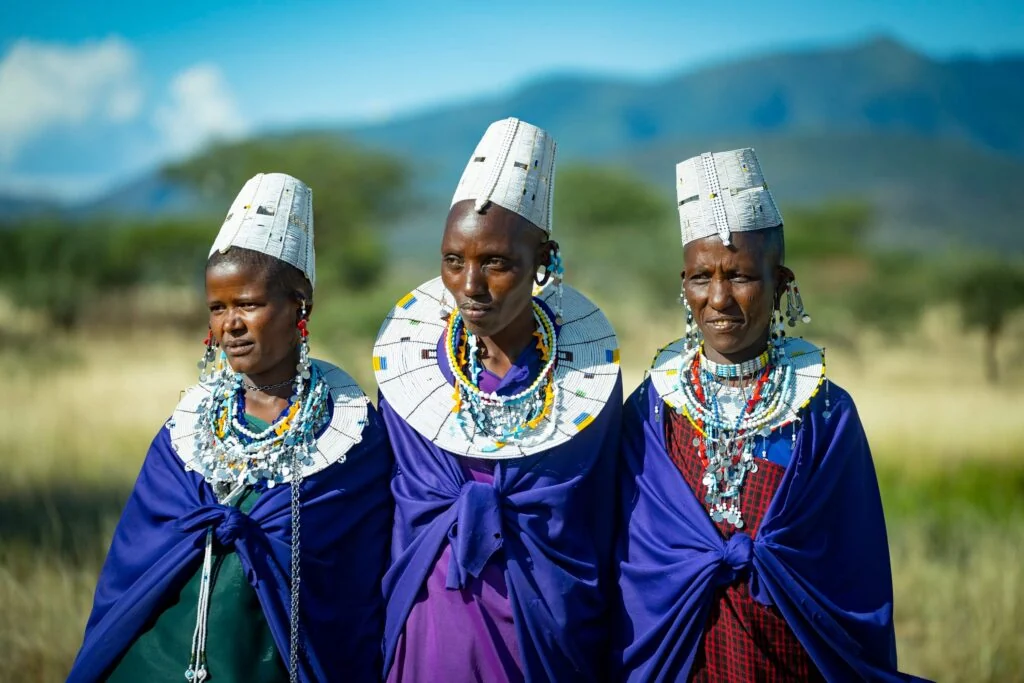
Beadwork, hairstyles, and clothing also carry cultural significance. The colors and designs used in traditional ornaments can reflect beauty, identity, social relationships, and community customs.
Some traditional practices have changed over time, while others continue to be observed as important expressions of Maasai heritage.
The Famous Maasai Jumping Dance
The Adumu Dance
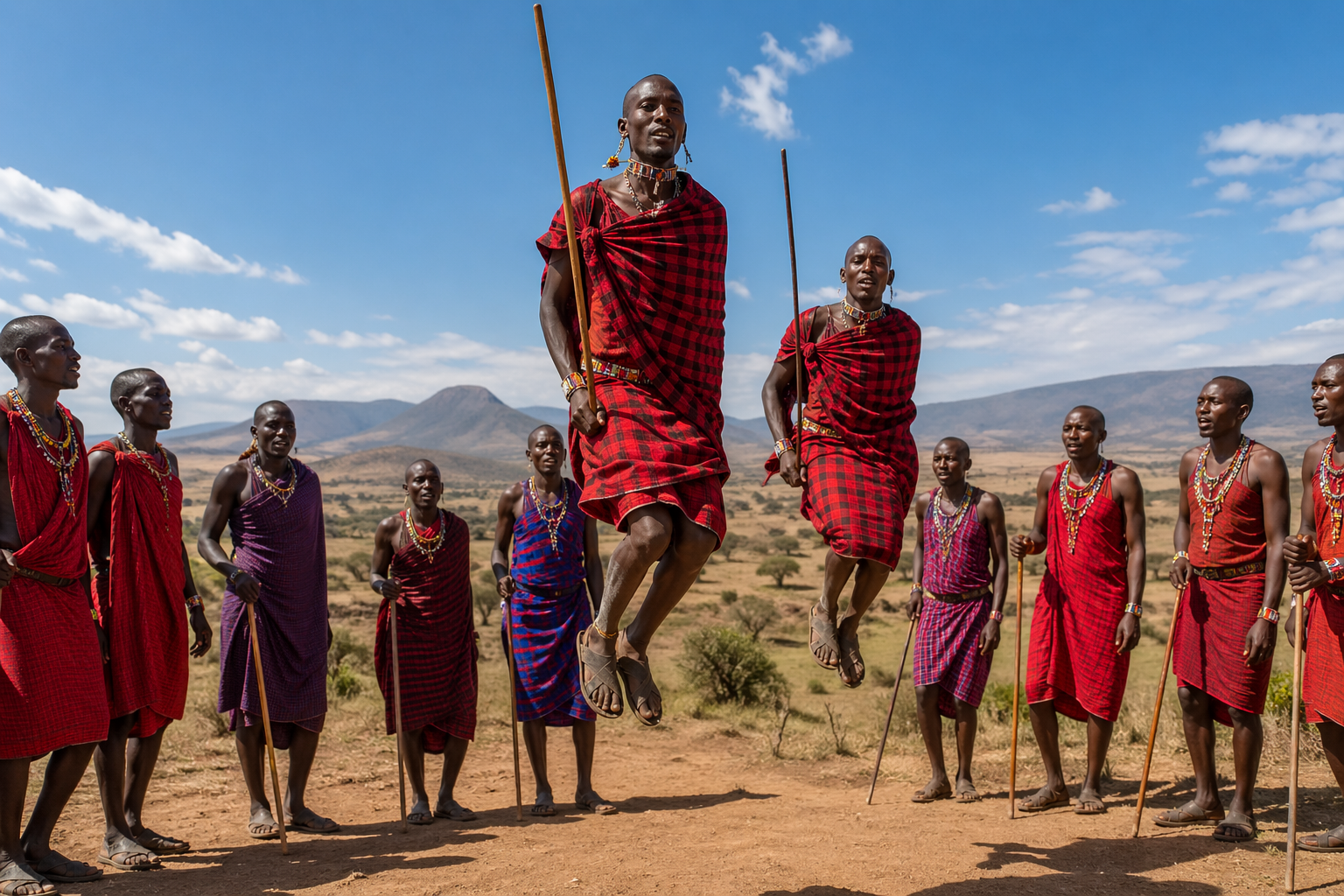
One of the most recognizable Maasai cultural performances is the jumping dance known as adumu.
During the performance, young Maasai men form a circle and take turns jumping vertically into the air while others sing and maintain a rhythmic melody.
The dancers often wear traditional clothing, including brightly colored shukas, and demonstrate their strength, coordination, and physical ability.
The height and style of the jumps are among the most noticeable features of the performance. The dance is commonly associated with Maasai warrior traditions and is performed during cultural celebrations and community gatherings.
Today, the adumu is also presented during cultural visits and tourism experiences. It has become one of the most widely recognized expressions of Maasai culture.
Visitors who attend a cultural performance can learn about the songs, movements, and traditions connected with the dance.
Maasai Garments: Colorful Shuka Capes
The bright clothing worn by the Maasai is one of the most recognizable features of their cultural identity.
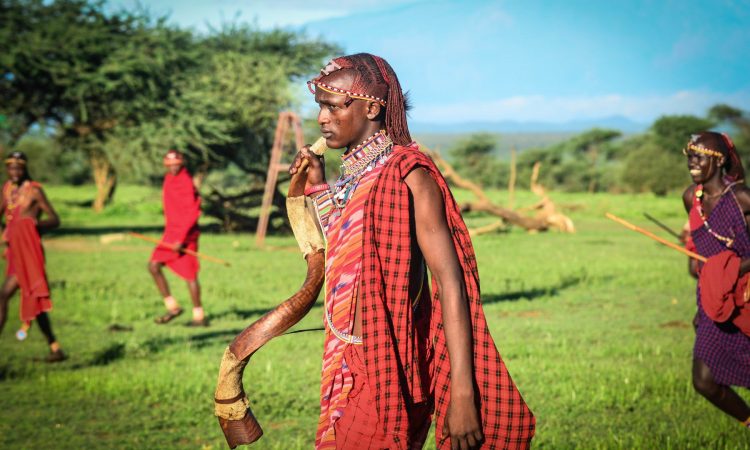
Traditional garments called shuka are commonly made from colorful fabric, often featuring red, blue, black, or checked patterns. They are wrapped around the body and can be worn in different styles depending on personal preference and local customs.
Animal skins were traditionally used for clothing before manufactured fabrics became more widely available. Over time, cotton and other modern textiles became popular among Maasai communities.
The shuka is now closely associated with Maasai identity and is worn by both men and women.
Footwear also reflects a combination of traditional skills and modern creativity. In some communities, sandals made from recycled vehicle tires are popular because they are durable and practical for walking across rough terrain.
Maasai Beaded Ornaments
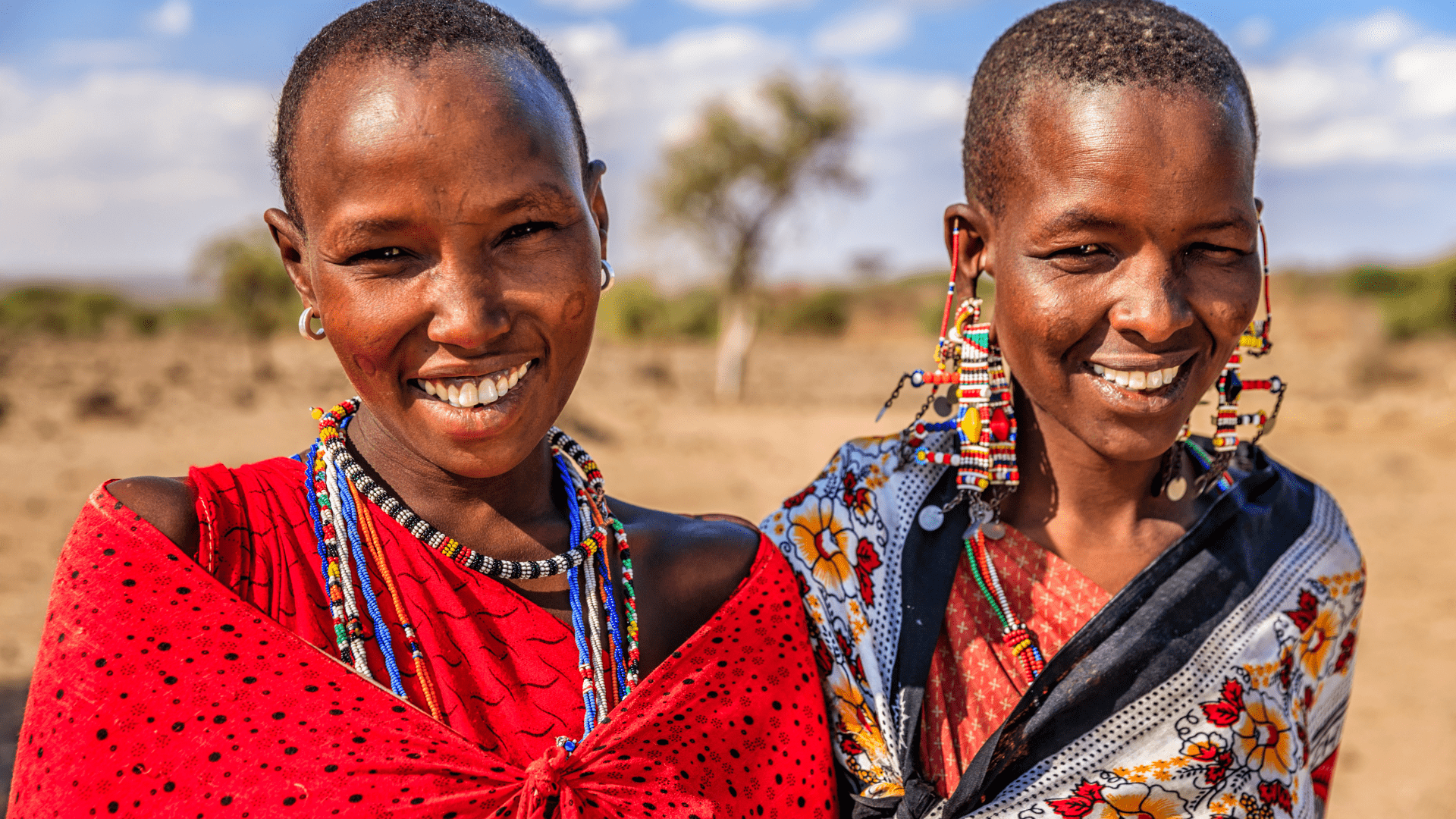
Beadwork is an important part of Maasai culture and is particularly associated with women's traditional craftsmanship.
Maasai women create colorful necklaces, bracelets, earrings, belts, and other decorative accessories using beads arranged in detailed patterns.
The ornaments are worn during everyday activities as well as special celebrations. Their colors and designs may carry cultural meanings connected with identity, beauty, age, and social relationships.
Beadwork is also an important source of income for many women. Handmade jewelry and other crafts are sold in local markets, roadside stalls, cultural centers, and tourist destinations.
For visitors, purchasing authentic handmade beadwork can be a meaningful way to support local artisans and appreciate traditional craftsmanship.
Maasai Weapons and Traditional Tools
Traditional Maasai warriors are often associated with wooden staffs, spears, and short swords.
These objects have historically served practical purposes, including protecting livestock and defending communities. They also carry cultural significance and may be associated with traditional warrior identity.
A long staff can be useful while walking across the savannah or managing livestock. Spears have traditionally been used for protection, while clubs and short swords have served as weapons and symbolic accessories.
Today, many Maasai communities live peacefully alongside their neighbors and participate in modern society. Traditional weapons are not a necessary part of everyday life for most people, although some continue to carry traditional tools as part of their cultural identity.
Some Maasai men also work in tourism and conservation, including as guides, rangers, and security staff. Their knowledge of local landscapes and wildlife can be valuable in these roles.
Maasai Food and Traditional Diet
Traditional Maasai food is strongly connected to livestock keeping. Milk and meat have historically been important parts of the diet, with cattle, goats, and sheep providing essential food resources.
Milk is particularly important and may be consumed fresh or prepared in different traditional ways. Meat is also eaten during special occasions and ceremonies.
Cow's blood has traditionally been consumed by some Maasai communities, sometimes mixed with milk. It has been associated with particular cultural practices and nutritional traditions.
The traditional diet has also changed over time. Foods such as maize, rice, potatoes, vegetables, and other agricultural products are now consumed by many Maasai households.
Access to markets, education, employment, and modern food systems has contributed to changes in eating habits.
Although livestock remains central to Maasai culture, contemporary diets vary considerably between communities and households.
The Importance of Maasai Traditions
Maasai traditions have been passed down through generations through family relationships, ceremonies, language, storytelling, and everyday activities.
Respect for elders, the importance of livestock, traditional clothing, beadwork, and community cooperation remain significant parts of Maasai cultural identity.
However, Maasai communities are not isolated from the modern world. Education, healthcare, tourism, technology, and changing economic conditions have influenced how people live.
Some families continue to follow traditional pastoral lifestyles, while others combine livestock keeping with farming, business, education, or paid employment.
The Maasai experience shows how a community can maintain a strong cultural identity while adapting to new opportunities and challenges.
Further Reading and Watching About the Maasai
Travelers interested in learning more about Maasai culture may enjoy films and books that explore the community's traditions and experiences.
Maasai: The Rain Warriors
Maasai: The Rain Warriors is a feature film directed by Pascal Plisson. It was filmed in East Africa and features Maasai performers, offering a cinematic portrayal of Maasai culture and traditional life.
The story follows young warriors on a fictional journey connected to a traditional legend about drought, rain, and the search for a lion.
The film provides an opportunity to appreciate Maasai landscapes, clothing, hairstyles, music, and cultural expressions.
The White Maasai
The White Maasai is an autobiography by Swiss author Corinne Hofmann.
The book describes her experiences after meeting a Maasai man during a visit to Kenya in 1986. She later married him and lived in a Maasai community, where she experienced a different way of life.
Her story explores relationships, cultural differences, family life, and the challenges of adapting to another society. The book was later adapted into a film of the same name.
Frequently Asked Questions About the Maasai
Is it true that the Maasai hunt lions?
Historically, some Maasai warriors hunted lions. Lion hunting was associated with protecting livestock and, in certain communities, traditional warrior practices.
However, lion hunting is not a normal part of modern Maasai life. Wildlife conservation efforts and legal protections have encouraged communities to move away from these practices.
Today, many Maasai participate in wildlife conservation and work alongside organizations protecting lions and other animals.
Do lions attack Maasai people?
Lions are wild predators and can sometimes come into conflict with people, particularly where livestock grazing areas overlap with wildlife habitats.
Attacks on livestock can create serious challenges for pastoral communities. In some cases, lions may also threaten people, especially when animals are being protected or when communities are located close to wildlife areas.
Conservation programs increasingly focus on reducing conflict between people and wildlife through improved livestock protection, community education, and compensation initiatives.
Do the Maasai actually drink animal blood?
Yes. Drinking cattle blood has traditionally been practiced in some Maasai communities.
Blood may be consumed fresh or mixed with milk. It has been associated with traditional dietary practices and certain ceremonies.
However, this practice is not followed by every Maasai family, and modern dietary habits vary considerably between communities.
Are the Maasai among the tallest people in the world?
The Maasai are often described as a tall ethnic community, and many individuals are recognized for their slender physiques.
However, claims that they are the tallest people in the world should be treated cautiously. Average height varies between individuals and populations, and reliable comparisons require consistent scientific data.
Do the Maasai always charge money for photographs?
Not necessarily. Attitudes toward photography vary between individuals and communities.
Some Maasai people are happy to have their photographs taken, while others may request payment, especially when photography is part of a cultural tourism activity.
Visitors should always ask permission before taking photographs and respect the wishes of the people they meet.
When visiting a cultural village, it is best to understand the arrangements beforehand and agree on any photography fees in advance.
Are the Maasai people disappearing?
The Maasai people are not disappearing as an ethnic community. Their population remains significant in Tanzania and Kenya.
However, some aspects of traditional Maasai culture are changing as communities adapt to modern education, employment, technology, settlement patterns, and economic conditions.
The challenge is not simply population decline but the preservation of cultural knowledge, language, traditional skills, and community identity for future generations.
The Changing Future of Maasai Culture
Maasai culture continues to evolve. Some traditional practices have become less common, while others remain central to community life.
Changes in grazing land availability, population growth, conservation policies, education, and employment opportunities have influenced traditional pastoral lifestyles.
Some families have shifted toward more permanent settlements, while others continue seasonal livestock movements. Many young Maasai are pursuing education and careers in tourism, business, conservation, and other professions.
There have also been important efforts to improve access to education and healthcare and to protect the rights of women and children.
Despite these changes, the Maasai continue to maintain a strong cultural identity. Their language, clothing, beadwork, music, ceremonies, and relationship with livestock remain important expressions of their heritage.
Understanding the Maasai means looking beyond the familiar images of red blankets and jumping dances. It means recognizing a diverse and living community whose traditions continue to develop in a changing world.
Experience Maasai Culture with Rumminess Africa Safaris
A visit to a Maasai community can be one of the most memorable cultural experiences during a Tanzania safari.
Travelers can learn about traditional homes, livestock keeping, beadwork, local food, music, and dances while gaining a better understanding of the community's history and everyday life.
Depending on the location and arrangements, a cultural visit may include meeting local families, exploring a traditional boma, learning about handmade crafts, and watching traditional performances.
At Rumminess Africa Safaris, we can help you include an authentic Maasai cultural experience in your Tanzania safari itinerary. Whether you are exploring the Serengeti, visiting the Ngorongoro Conservation Area, or discovering the landscapes of northern Tanzania, we can help arrange a respectful cultural visit that connects you with the people and traditions of this remarkable region.
Stories in Every Frame