12 Ngorongoro Crater Facts
Outlines
Ngorongoro Crater: Tanzania’s Natural Wonder and Wildlife Paradise
The Ngorongoro Crater, often described as Africa’s Garden of Eden, is one of Tanzania’s most remarkable natural attractions. Located in northern Tanzania within the Ngorongoro Conservation Area, this extraordinary destination is famous for its dramatic landscapes, rich wildlife, and fascinating history.
The crater was formed more than 2.5 million years ago when a massive volcano erupted and collapsed, creating one of the largest intact volcanic calderas in the world. Today, the crater covers approximately 259 square kilometres (100 square miles) and reaches a depth of more than 600 metres (1,968 feet).
The wider Ngorongoro Conservation Area covers approximately 8,292 square kilometres (3,202 square miles), protecting diverse landscapes, wildlife, and important archaeological sites.
The best time to visit Ngorongoro Crater is generally from June to October, during the dry season, when wildlife viewing is particularly rewarding. However, the green season from November to May also offers beautiful scenery, excellent birdwatching opportunities, and fewer visitors during certain months.
Ngorongoro is often combined with visits to Serengeti and Tarangire national parks, making it an essential destination on a northern Tanzania safari. Visitors can also combine a wildlife safari with a Mount Kilimanjaro climbing adventure.
What Makes Ngorongoro Crater Unique? Interesting Facts About Ngorongoro
Ngorongoro is one of Africa’s most extraordinary wildlife destinations. From its ancient volcanic history to its remarkable wildlife and cultural heritage, there is plenty to discover.
1. One of the Highest Concentrations of Wildlife in Africa
Ngorongoro Crater is famous for supporting a remarkable concentration of wildlife within a relatively small area. Its grasslands, wetlands, woodlands, and freshwater sources provide suitable habitats for thousands of animals.
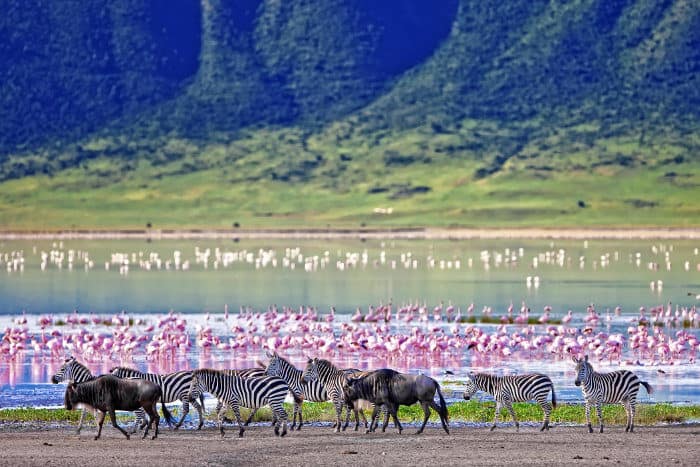
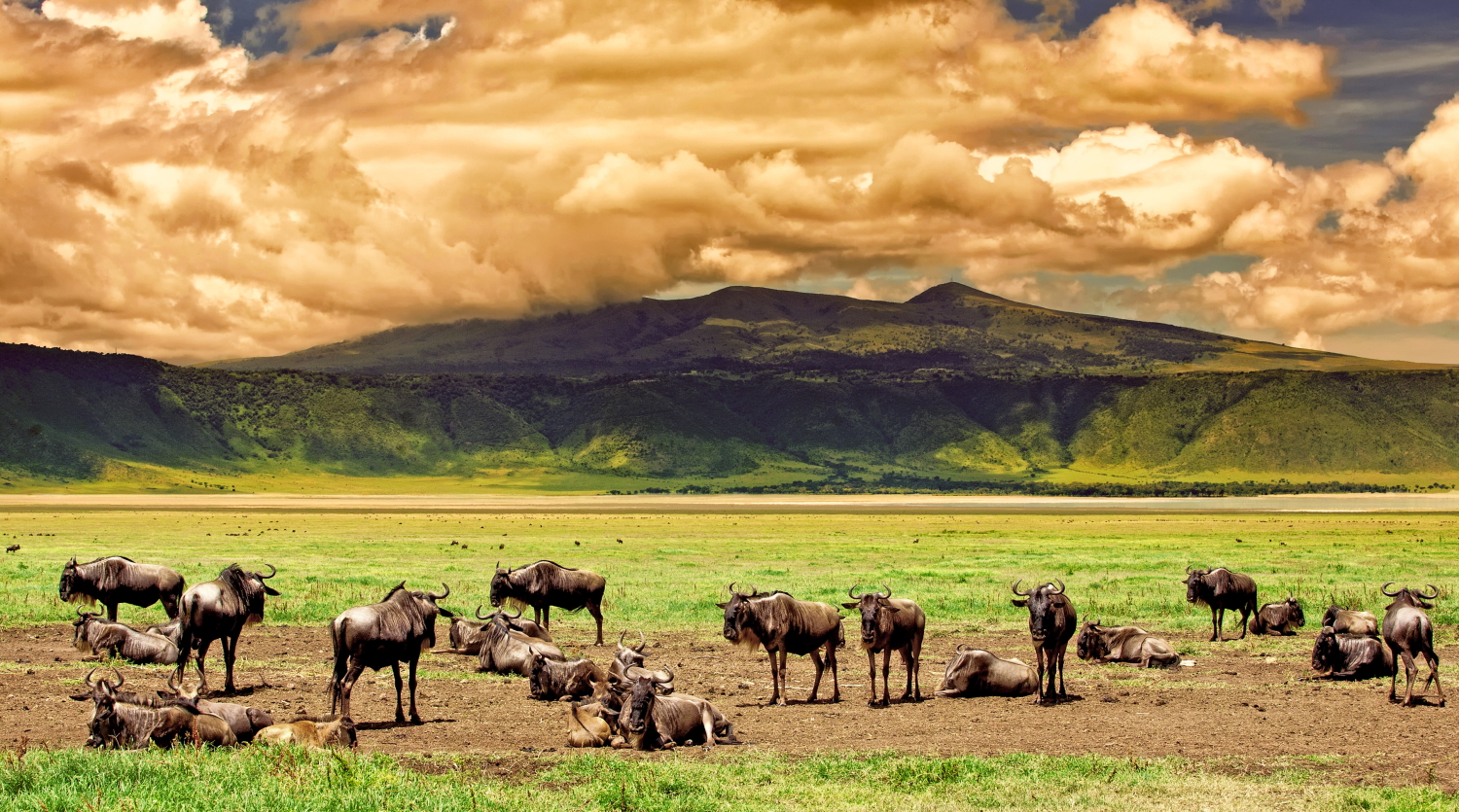
Visitors can encounter elephants, lions, buffaloes, zebras, wildebeest, hyenas, and many other species during a single game drive.
The crater floor offers excellent opportunities for wildlife viewing because many animals remain within its natural boundaries throughout the year. This makes Ngorongoro one of the most rewarding safari destinations in Tanzania.
2. The World's Largest Intact Volcanic Caldera
Ngorongoro is recognised as the world's largest intact and unfilled volcanic caldera. It formed more than two million years ago after a massive volcano erupted and its summit collapsed.
The result is an enormous natural basin surrounded by steep crater walls that rise hundreds of metres above the floor.
From the crater rim, visitors can enjoy breathtaking views across the grasslands, forests, lakes, and wetlands below. The combination of volcanic history and diverse landscapes makes Ngorongoro a truly remarkable natural attraction.
3. Ngorongoro Is Connected to the History of Human Evolution
The Ngorongoro Conservation Area is internationally important for archaeological and palaeontological discoveries that have helped scientists understand human evolution.
One of the most significant nearby sites is Olduvai Gorge, often called the Cradle of Humankind. Important discoveries made there by Louis Leakey, Mary Leakey, and other researchers include ancient hominin fossils and early stone tools.
Another important archaeological site is Laetoli, where fossilized footprints dating back approximately 3.6 million years provide evidence of early upright walking.
Visitors interested in history and human evolution can explore Olduvai Gorge and its museum as part of a wider Ngorongoro safari experience.
4. A UNESCO World Heritage Site
The Ngorongoro Conservation Area was established in 1959 as a protected area designed to support wildlife conservation while allowing human communities, particularly the Maasai, to continue living within the landscape.
In 1979, UNESCO recognised the area as a World Heritage Site because of its outstanding natural and cultural importance.
Its protected landscapes support a wide range of wildlife, while its archaeological sites preserve important evidence of human history. The Ngorongoro Conservation Area Authority manages the area and oversees conservation and tourism activities.
5. Lake Magadi: A Soda Lake Inside the Crater
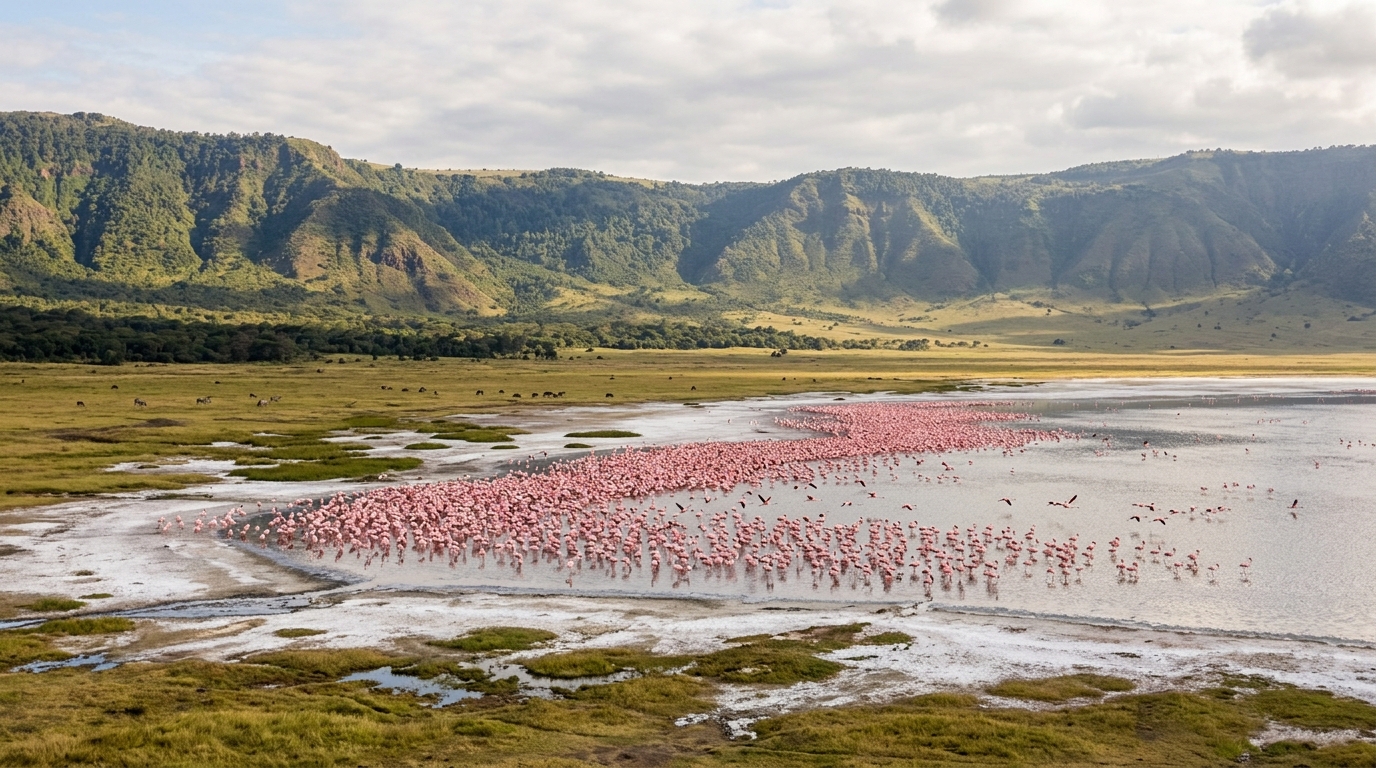
One of the most beautiful features of Ngorongoro Crater is Lake Magadi, a shallow alkaline lake located on the crater floor.
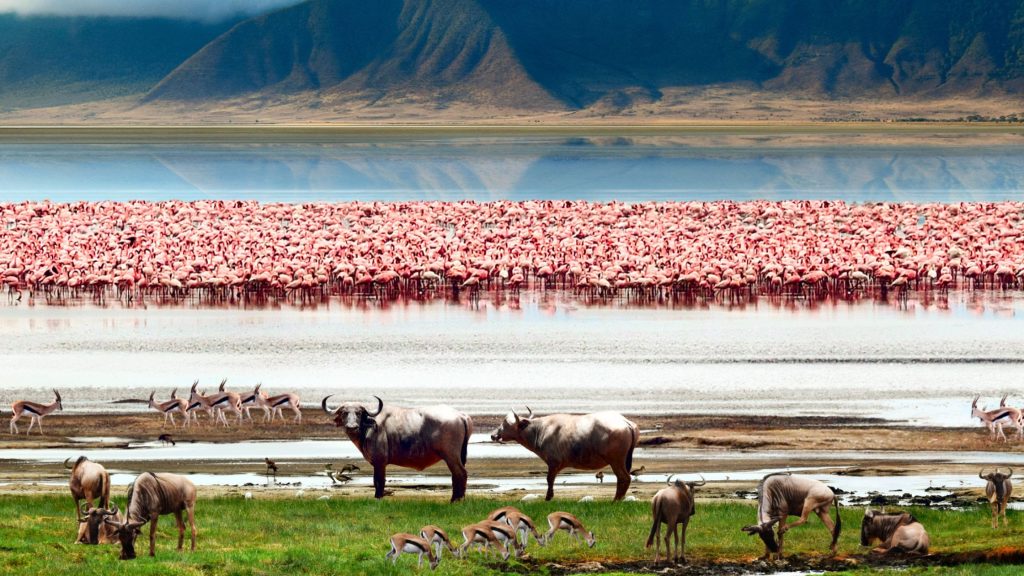
The lake attracts flamingos and other waterbirds that feed on algae and small aquatic organisms found in its waters.
Depending on the season and water conditions, visitors may see large groups of flamingos gathering along the lake's edges. Other wildlife, including zebras and buffaloes, can also be spotted around nearby water sources.
Lake Magadi adds to the crater's scenic beauty and provides excellent opportunities for photography and birdwatching.
6. Home to Endangered Black Rhinos
Ngorongoro Crater is one of Tanzania's important habitats for the endangered black rhinoceros.
These rare animals are protected through conservation and anti-poaching efforts. The crater provides suitable grassland and woodland habitats where rhinos can feed and move around.
Although sightings are not guaranteed, visitors sometimes have the opportunity to observe black rhinos during game drives. Seeing one in its natural environment is among the most memorable wildlife experiences in Ngorongoro.
7. Luxury Lodges With Spectacular Crater Views
Ngorongoro offers a variety of accommodation options, from comfortable lodges and tented camps to high-end luxury properties.
Some lodges are located along the crater rim, offering spectacular views over the caldera and surrounding highlands. Others are situated in nearby areas, providing convenient access to the crater and other attractions within the conservation area.
Accommodation options include Ngorongoro Serena Safari Lodge, Lake Ndutu Luxury Tented Lodge, and several other properties.
Whether you prefer a budget-friendly safari stay or a luxury experience, Ngorongoro offers accommodation choices to suit different travel styles.
8. The Maasai People Live Within the Conservation Area
The Ngorongoro Conservation Area is unique because it combines wildlife conservation with human settlement.
The Maasai are among the most well-known communities living in the area. Their traditional pastoral lifestyle is closely connected to livestock keeping, cultural practices, and the surrounding natural environment.
Visitors can learn about Maasai traditions, traditional homes, clothing, ceremonies, and daily activities through respectful cultural visits arranged with local communities.
The conservation area is also home to other communities, including the Datoga and Hadza in parts of the wider region.
9. The Great Migration Passes Through the Ngorongoro Conservation Area
The Great Wildebeest Migration is one of Africa's most impressive wildlife events. Millions of wildebeest, accompanied by zebras and gazelles, move through the Serengeti ecosystem in search of fresh grazing and water.
During parts of the year, migrating herds pass through the Ngorongoro Conservation Area, particularly the southern plains around Ndutu.
From approximately December to March, the Ndutu area becomes an important calving ground, attracting large numbers of wildebeest and predators.
Although the main migration does not pass through the Ngorongoro Crater itself, visitors can combine a crater safari with a migration experience in the surrounding Serengeti ecosystem.
10. Ngorongoro Crater Has Appeared in Films and Documentaries
The spectacular landscapes of Ngorongoro have attracted filmmakers, photographers, researchers, and wildlife enthusiasts from around the world.
Its dramatic crater walls, open grasslands, lakes, and abundant wildlife provide an ideal setting for nature documentaries and wildlife photography.
The area's natural beauty continues to make it one of Tanzania's most recognisable destinations, featured in numerous travel and wildlife productions.
11. Remarkable Wildlife Diversity
Ngorongoro Conservation Area supports a wide variety of wildlife species across its different habitats.
The crater floor is particularly famous for its large mammals, including lions, elephants, buffaloes, zebras, wildebeest, hyenas, and black rhinos.
However, giraffes are rarely found on the crater floor because the steep crater walls make access difficult. They can be seen in other parts of the wider conservation area.
The diversity of wildlife and the relatively open landscape make Ngorongoro an excellent destination for visitors hoping to experience several African animals during one safari.
12. A Paradise for Birdwatchers
Ngorongoro is also an excellent destination for birdwatching, with more than 550 bird species recorded across the wider conservation area.
The different habitats support a variety of birds, including flamingos, ostriches, eagles, vultures, storks, and colourful smaller species.
Lake Magadi attracts waterbirds, while the grasslands and woodlands provide habitats for ground-dwelling birds and birds of prey.
Some notable species include the lilac-breasted roller, kori bustard, ostrich, and various sunbirds. The diversity of birdlife makes Ngorongoro rewarding for both experienced birdwatchers and casual visitors.
Best Time to Visit Ngorongoro Crater
Ngorongoro Crater can be visited throughout the year, but the experience changes with the seasons.
Dry Season: June to October
The dry season is one of the most popular periods for visiting Ngorongoro. Shorter grass and favourable road conditions often make wildlife easier to spot. Animals also gather around available water sources, creating excellent game-viewing opportunities.
Green Season: November to May
The green season brings rainfall, fresh vegetation, and beautiful scenery. The landscape becomes greener, and birdwatching is particularly rewarding.
From December to March, visitors can also combine their Ngorongoro safari with a visit to the Ndutu plains to witness the wildebeest calving season.
Each season offers a different experience, so the best time depends on your interests, travel dates, and preferred safari activities.
Final Thoughts
Ngorongoro Crater is one of Tanzania's most extraordinary safari destinations, combining spectacular volcanic scenery, abundant wildlife, and important cultural and archaeological heritage.
From observing lions and elephants on the crater floor to learning about ancient human history at Olduvai Gorge, every visit offers something special.
The wider Ngorongoro Conservation Area is also an important example of how wildlife conservation, cultural heritage, and natural landscapes can exist together.
Explore Ngorongoro Crater With Rumminess Africa Safaris
A Ngorongoro Crater safari is an unforgettable experience and an essential part of exploring Tanzania's northern safari circuit.
With Rumminess Africa Safaris, you can discover Ngorongoro alongside other famous destinations such as Serengeti National Park, Tarangire National Park, and Lake Manyara National Park.
Whether you are planning a short wildlife adventure, a family holiday, a honeymoon safari, or a longer Tanzania safari, we can help you experience the beauty of Ngorongoro and its incredible wildlife.
INSPIRE YOUR JOURNEY